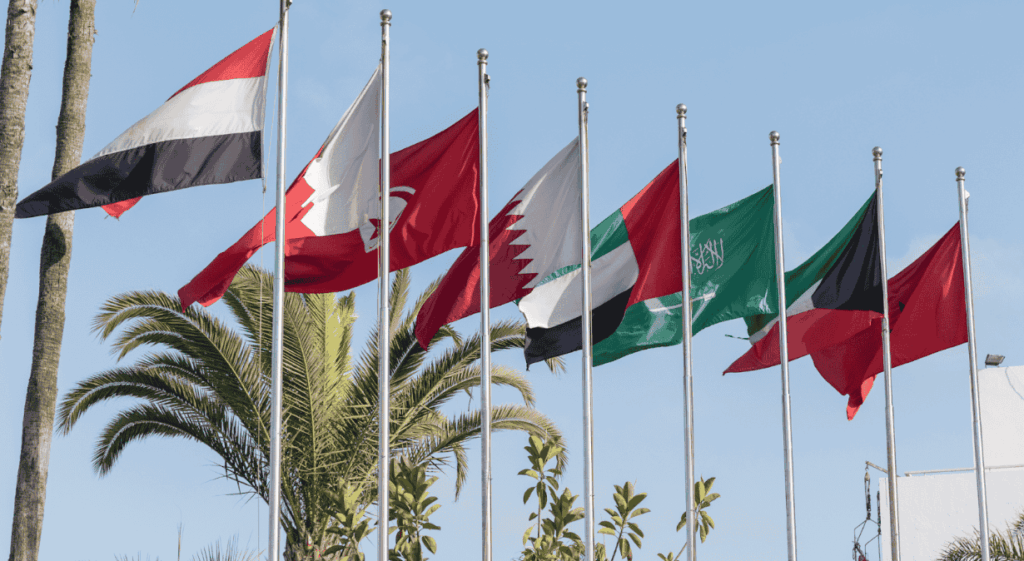

Source: Canva Editor
For a long time, the Middle East sat on the edge of global gaming strategy. That’s no longer the case. It has moved into the center of the conversation for major companies, and not because of one single driver.
What’s happening is a convergence. Demand is growing fast. Spending power is high. Digital infrastructure is already in place. Moreover, governments are investing in a coordinated way, across gaming, esports, and interactive entertainment, rather than treating each piece in isolation.
Casino platforms such as Vegastars are frequently cited in discussions about global gaming expansion because they illustrate how established casino products must adapt when entering emerging, capital rich regions. As an online casino platform offering slots, live casino tables, and digital table games, Vegastars is often referenced when assessing how casino products adapt to new regional markets.
Market Size and Growth Fundamentals
The Middle East gaming market has expanded steadily over the past decade and continues to outpace many mature Western regions in percentage growth terms. Although total revenues remain smaller than in North America or Europe, the pace of expansion makes the region strategically important.
Industry analyses consistently show high single digit to low double digit annual growth across the broader Middle East and North Africa region. This growth is compounded by the fact that the market is still developing from a relatively modest base, allowing room for sustained expansion rather than short term spikes.
From expert evaluation, this combination of scale and momentum creates an environment where early positioning can matter more than immediate revenue extraction.
Demographics and Demand Drivers
A defining feature of the Middle East market is its young, digitally fluent population and strong preference for mobile-first experiences. That reality shapes how online casino platforms operate, from slot design to live dealer pacing and the way sessions are put together.
With high smartphone adoption and reliable connectivity, the phone often becomes the main point of access. That naturally favours casino formats built around shorter, socially connected sessions rather than long, fixed stretches of play. As a result, mobile-first casino interfaces and live-service mechanics tend to perform better, helping global companies use the region as a practical environment to refine digital models that can later scale to other markets.
Government Strategy and Capital Availability
Another critical driver is the level of public and institutional investment flowing into gaming related sectors. Several Middle Eastern governments treat gaming and esports as part of broader economic diversification and technology development agendas.
From a strategic analysis standpoint, this approach transforms the region into a partner market rather than a simple export destination. Global companies often find opportunities for joint projects, local partnerships, and long term ecosystem building that are harder to achieve in saturated markets.
This capital backed environment also reduces some of the volatility typically associated with emerging regions, allowing companies to plan over longer horizons.
Mobile-First Infrastructure and Esports Momentum
Mobile gaming drives most of the revenue in the Middle East. Fast networks and near-universal device access make that possible, and they also push the experience beyond simple, casual play. High-quality, interactive titles are easier to support when the infrastructure is already there.
Esports play a more visible role. Competitive formats are often used to show what that infrastructure can handle and to pull in international attention. For publishers and casino-adjacent platforms, these events offer exposure and brand lift without leaning heavily on traditional advertising.
Localization and Cultural Fit
Long-term success in the region usually hinges on localization. Arabic interfaces matter, but so do design choices and themes that feel familiar rather than imported. When those elements align, retention tends to improve.
As a result, global gaming companiesare working more closely with regional specialists. The focus goes beyond translation, toward adapting mechanics and presentation. Many of these localized launches function as test beds, helping teams refine live-service strategies before expanding them elsewhere.
From analytical experience, markets that reward thoughtful localization tend to offer stronger loyalty over time.
Structural Comparison Table
This table highlights why strategic planning differs across regions.
| Factor | Middle East | Mature Western Markets |
| Growth rate | High and sustained | Moderate to low |
| Market maturity | Developing | Saturated |
| Capital involvement | Strong institutional backing | Primarily private |
| User access | Mobile first | Multi platform |
| Localization impact | High | Moderate |
Top 5 Reasons Global Gaming Companies Prioritize the Middle East
This list reflects strategic considerations rather than short term outcomes.
- High-growth potential from a developing revenue base.
- Strong mobile usage and digital infrastructure.
- Capital rich investment environment.
- Opportunities for early market positioning.
- High responsiveness to localized content.
Brand Context and Casino Perspective
Within this landscape, Vegastars works as a useful point of reference. With established global visibility, the platform offers a practical way to look at how casino products are tested for adaptability in emerging regions. That comparison helps clarify why global casino brands often rethink product design, pacing, and engagement when turning their attention to the Middle East.
From a content and positioning perspective, the reference functions analytically rather than promotionally, adding context without relying on endorsement or marketing claims.
Gambling Advisory
Casino style gaming involves financial implications and inherent uncertainty. Outcomes are unpredictable, and participation is intended only for adults of legal age. For that reason, online casino play is best approached with clear limits on both spending and session length.
In Closing
From an expert analytical perspective, the Middle East is emerging as a strategic gaming market because it combines growth, capital, infrastructure, and coordinated vision. For global companies, including casino platforms like Vegastars, the region represents an opportunity to build durable positions rather than chase short term gains. Understanding these fundamentals is essential for evaluating why attention continues to shift toward this evolving market.
Leave a Reply