Football games hand more control to players
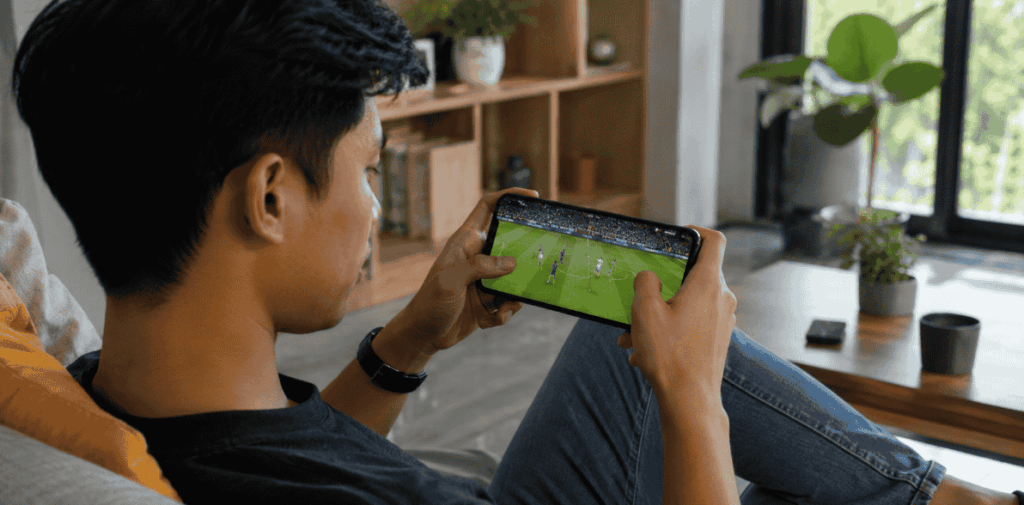

Alt: Person plays a football game on a mobile phone while sitting in a chair
Online football games are giving users more control over decisive moments. Recent updates expand player switching, defensive positioning, pass direction, first touches and goalkeeper movement. Patch notes now matter beyond the game itself, because esports followers using services such as mm.1xbet.com need to know whether a result came from assisted movement or direct input. EA Sports FC 26 has strengthened manual defending and made through balls more accurate, while eFootball supports directional cursor changes and direct goalkeeper commands. Timing, space and mistakes are now easier to recognise.
Switching defenders before danger starts
Automatic switching often follows the ball even when the real threat is an unmarked runner. Directional cursor changes let the user choose a teammate toward a selected area and cover a passing lane before the final ball. Faster jockeying in FC 26 also helps manually controlled defenders stay balanced against dribblers.
| Manual option | Effect during play |
| Directional switching | Selects a defender toward the chosen space |
| Faster jockeying | Helps track turns without overcommitting |
| Goalkeeper movement | Allows earlier positioning for crosses and shots |
| Player lock | Keeps control of one footballer during an attack |
| Pressure command | Sends support while another zone is protected |
These controls do not remove errors. Choosing the wrong centre-back can open the middle, while bringing the goalkeeper forward too soon may leave an empty goal. That risk separates strong defensive play from assistance.
For betting on competitive matches, this changes how a record should be read. A participant who defends manually may concede more while learning a patch, then improve once switching becomes consistent. Recent results, goals allowed and opponent quality offer better context than a win percentage collected under an older control system.
Passing shows who read the pitch
Passing has become more dependent on intention. FC 26 widened the angles available for responsive passes but reduced the reliability of difficult first-time through balls. FC Mobile links crossing, heading and long passing more closely to attributes, pressure and positioning. The user chooses the idea, but body shape and ability affect execution.
The clearest differences appear in ordinary situations:
- choosing the correct weight for a short pass;
- sending a runner before releasing the ball;
- avoiding a first-time pass when the angle is closed;
- using a lofted ball only when space is available;
- turning away from pressure before building again;
- selecting a safer restart instead of forcing a counterattack.
These details matter when live odds move after possession statistics or an early lead. One player may keep the ball without creating openings, while another produces fewer attacks but reaches better shooting positions. Bettors can compare chances, shot locations and repeated defensive mistakes instead of treating possession as proof of control.
A patch can change the competitive order
Gameplay updates can alter the value of previous form. Stronger manual defending may help patient players and punish those who relied on automatic tackles. More accurate gesture shots can favour mobile competitors with precise timing, while goalkeeper changes may alter scoring patterns.
Before a pre-match selection, check the game version, platform, mode, control preset and latest patch date. On a betting page, the Login to account option opens the profile; assessment begins with those details and post-update results.
Live betting requires similar care. A two-goal lead may reflect repeated switching errors rather than a large skill gap. If the trailing player changes formation and corrects those mistakes, the second half may look different. Total-goals and match-winner options should be judged against the pace and quality of chances. A tactical adjustment can matter more than the scoreline when deciding whether the current price still reflects play.
Mobile controls are catching up
Mobile football no longer depends entirely on simplified touch buttons. eFootball supports selected Bluetooth controllers during matches and allows touch input simultaneously. FC Mobile has refined gesture shooting, dribbling response, defensive recovery and tactical formations. These changes narrow the gap between handheld play and controller setups. Custom layouts let touch users move buttons away from crowded areas, reducing accidental presses during tackles and shots.
Connection quality still matters. A delayed command can resemble poor decision-making during quick switches or first-time passes. Tournament rules should state the platform, controller policy, and server conditions so viewers can separate technical disruption from tactical choice.
Assistance remains a choice
Developers are not removing assisted controls. They remain useful for newcomers and slower modes. The shift is toward manual alternatives that reward anticipation without forcing every user into the same setup. Manual control also makes individual habits easier to study across a full tournament. Improvements make each input visible without making every action difficult.
As more decisions move to the person holding the controller, online football becomes easier to analyse. A successful press, delayed run or well-timed goalkeeper movement can be traced to a clear input. That gives players more ownership and gives esports followers better evidence when judging form, tactics and the next contest.
Leave a Reply