The explosive adoption of generative artificial intelligence has fundamentally transformed digital communication and writing workflows. Tools powered by Large Language Models (LLMs)—such as OpenAI’s ChatGPT, Google’s Gemini, Anthropic’s Claude, and Meta’s Llama—allow millions of professionals, creators, and students to produce outlines, full-length articles, marketing copy, and business correspondence in seconds.

However, despite rapid advancements in synthetic intelligence, unedited AI-generated prose suffers from unmistakable structural drawbacks: monotonous sentence lengths, predictable vocabulary sequences, overly formal phrasing, and a characteristic lack of emotional cadence—often described as AI “fingerprints” or “tells.“
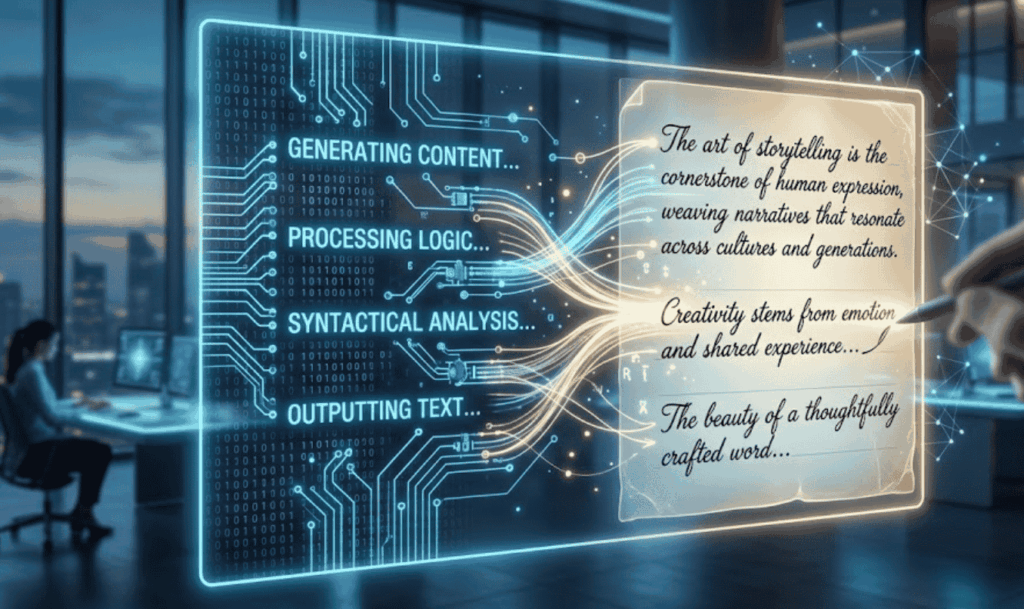
To address this creative and technical hurdle, ZeroGPT—a pioneering platform widely recognized for its AI detection systems—introduced its specialized humanizer. The tool is designed to bridge the gap between algorithmic generation and authentic human prose, refining robotic drafts into natural, engaging, and nuanced text while preserving the original context and factual integrity.
The Core Problem: Why Raw AI Copy Falls Short
To understand the necessity of an AI humanizer, one must look at how standard language models generate text. LLMs predict subsequent words based on probability distributions learned from massive internet corpora. Because they lean toward mathematically probable sequences, their output frequently manifests distinct limitations:
-
Low Perplexity (Predictability): Standard AI text avoids unusual phrasing, resulting in smooth but generic prose that often lacks flavor or personality.
-
Low Burstiness (Monotony): Human writers naturally vary the length and complexity of their sentences—mixing short, punchy statements with longer, rhythmic clauses. Machine generation, by contrast, tends toward uniform, mid-length sentences.
-
Overuse of Clichés and Formulaic Transitions: Phrases such as “In conclusion,” “Delve into,” “Tapestry,” and “It is important to remember” appear with unnatural frequency across machine-generated drafts.
-
Algorithmic Detection: Academic institutions, corporate hiring filters, and search engines have increasingly deployed AI classifiers to evaluate content authenticity, potentially flagging unaltered AI output.
Standard paraphrasers often exacerbate these issues by simply replacing words with awkward synonyms. An AI humanizer, by contrast, rebuilds the structural architecture of the text.
What Is the ZeroGPT AI Humanizer?
The ZeroGPT AI Humanizer is an automated language refinement engine that re-engineers synthetic text into organic, human-sounding content. Rather than performing simple synonym swaps, it evaluates the tone, cadence, and syntax of the input draft to recreate the natural irregularities and stylistic nuances of genuine human writing.
The web post outlines a straightforward, multi-tier utility designed for general users as well as high-volume professionals looking to improve readability, enhance reader engagement, and maintain credibility across automated review systems.
Key Features and Architectural Highlights
ZeroGPT’s humanizing ecosystem incorporates several key technical and practical capabilities:
1. Broad Multi-Model Compatibility
The humanizer is model-agnostic. Whether a draft originates from ChatGPT (GPT-4o/GPT-5), Gemini, Claude, DeepSeek, or open-source Llama frameworks, the tool identifies and strips out the distinctive linguistic signatures characteristic of each model.
2. Dual-Tier Humanization Architecture
To cater to different user needs, ZeroGPT provides two operational tiers:
-
Basic Public Model (Free): Accessible to all users without mandatory registration. It restructures phrasing, cleans up robotic repetition, and significantly enhances general readability for daily tasks.
-
Advanced Model (Powered by Undetectable AI): Designed for rigorous professional and academic environments. This tier is engineered to achieve high readability rates and up to a 99% human classification score across sophisticated AI detection engines.
3. Semantic & Factual Preservation
A critical risk when modifying automated text is “semantic drift”—where the core argument or numerical data is unintentionally altered. ZeroGPT’s underlying engine is calibrated to modify stylistic attributes, syntax, and pacing while maintaining exact factual accuracy, data points, and core meaning.
4. Integrated Verification Workflow
Users can evaluate AI probability before and after humanizing their text directly within the unified dashboard, eliminating the need to jump between multiple standalone detection and editing tabs.
Step-by-Step Workflow: How It Works
The platform simplifies text humanization into an intuitive four-step sequence:
┌─────────────────────────┐ │ 1. Paste Input Text │ ──> Insert draft from any generative LLM └────────────┬────────────┘ │ ┌────────────▼────────────┐ │ 2. Scan AI Probability │ ──> Run integrated detector to identify machine tells └────────────┬────────────┘ │ ┌────────────▼────────────┐ │ 3. Humanize Text │ ──> Restructure syntax, vary cadence, and boost perplexity └────────────┬────────────┘ │ ┌────────────▼────────────┐ │ 4. Polish & Finalize │ ──> Add personal touch and context-specific nuance └─────────────────────────┘ -
Input Submission: The user pastes their draft or uploads a document into the text console.
-
Detection Baseline: Clicking “Check for AI” reveals the initial detection metrics and flags sections that exhibit heavy algorithmic patterns.
-
Automated Conversion: Activating “Humanize Text” initiates the syntactic transformation, smoothing abrupt transitions and enhancing sentence variety.
-
Final Stylistic Polish: The refined output is generated in real time, allowing users to apply personal touches or domain-specific terminology before publication.
Practical Applications Across Domains
| User Persona | Common Use Cases | Core Benefit |
| Content Creators & Bloggers | Articles, newsletters, video scripts, social media captions | Boosts reader retention, lowers bounce rates, and ensures engaging, personal copy. |
| SEO Strategists & Marketers | Landing pages, promotional copy, product descriptions | Creates natural, helpful content that aligns with modern search quality benchmarks. |
| Corporate Professionals | Client emails, memos, corporate proposals, reports | Ensures internal and external communications sound polished, confident, and professional. |
| Job Seekers | Resumes, cover letters, outreach messages | Transforms generic, template-heavy AI drafts into distinctive, authentic personal pitches. |
| Academic Researchers & Students | Literature review drafting, essay structuring, editing | Enhances academic readability while assisting with non-native language fluency. (Note: Must align with institutional honor codes). |
Best Practices for Maximizing Humanized AI Content
While tools like ZeroGPT’s AI Humanizer handle the heavy lifting of syntactic restructuring, optimal results are achieved when human oversight is paired with machine speed:
-
Treat Output as an Advanced First Draft: Never publish raw output blindly. Always read the final text aloud to verify that the rhythm feels completely natural.
-
Inject Personal Anecdotes: Add unique case studies, firsthand experiences, or proprietary examples that no language model could fabricate.
-
Maintain Ethical Clarity: In academic and sensitive professional settings, verify guidelines regarding AI assistance and ensure transparent disclosure where mandated.
Conclusion: The Evolution of AI Writing
The development of AI humanization tools highlights a major shift in how synthetic text is integrated into modern workflows. Rather than treating artificial intelligence and human writing as mutually exclusive, modern digital ecosystems are moving toward a collaborative paradigm: generative AI provides the scale, research speed, and initial framework, while humanization engines and human editors restore nuance, tone, and authentic connection.
By eliminating mechanical monotony and preserving original meaning, the ZeroGPT AI Humanizer delivers an indispensable utility for writers navigating an increasingly automated digital landscape.
Leave a Reply