How Lottery Winners Are Paid

The lottery is frequently referenced as the symbol of an unlikely outcome in other areas of life, yet somebody has to win it every year, and you can’t win if you don’t try. Besides, these winnings routinely set the biggest records for payouts in human history. Their magnitude is mind-boggling. Many countries have them. In the US, about $65-70 billion is won in lotteries per year. The biggest lotteries in America are the Powerball and the Mega Millions.
The latter is played in 45 different states, and every Tuesday and Friday, they pick a new ball for a winner. All you have to do is have all 6 of the numbers printed on your lottery slip match the drawing. The former uses 5 different numbers (1-69), drawn three days a week.
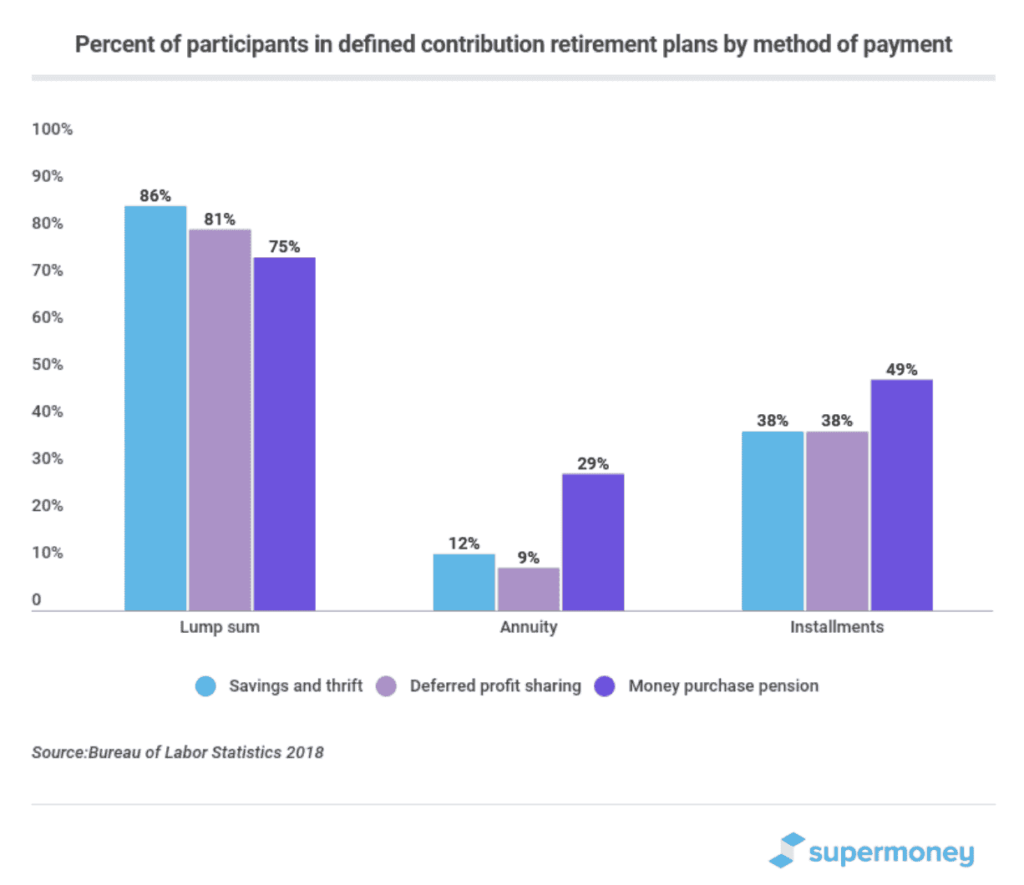
Those who luck into winning the whole enchilada get to choose from two different ways of receiving their money. It can be paid as an annuity, dispersed across 29 years, or it can be paid in one big sum. The biggest winnings to date have been $2.04 billion in 2022 to a California winner, $1.817 billion in 2025 to a lucky winner in Arkansas, and $1.787 to another player in California. If you also decide to test your luck in Odd96, you can gain a whole collection of physical prizes in addition to cash, which come in a much greater variety.
Annuity
In these cases, there is a set interval chosen until the winnings are totally disbursed. Taxes get set off proportionally the more of that money that you receive. Winners who go this route often do so expecting tax rates to fall in the future. This also serves the benefit that someone who is not the most responsible with money cannot make a big, reckless investment or splurge all that cash at once. At the same time, if you have an emergency, you can’t grab a bunch of that cash to take advantage of and save yourself.
Lump Sum
Here, you get the entire amount all at once. As soon as you get that money, you can kiss a huge chunk of it goodbye to taxes. You’ll be in a new income tax bracket, and your rate might shoot up by more than triple. This gives you the opportunity then to capitalize on that full amount right away, though, investing it into whatever areas you think will best serve your economic and security goals. So you get total flexibility with this. However, it only entails 55% of the total jackpot value.
In both of these cases, you can certainly expect to have a lot of people contacting you that you’ve known for a long time who will be looking for some help with cash, either to directly share some of your wealth with them, entice you for a business opportunity together, or to lend them money.
How Taxes Work
Sadly, a huge portion of your “winnings” you don’t get to keep. It’s just a headline figure, because the government runs it to a large degree thanks to the tax dollars it yields. You may even have to pay state tax. In the US, you typically get 24% federal tax withheld right away as an automatic baseline, but the actual top federal tax rate is 37%, so that’s what you should expect to pay on that level. Then, the state tax varies a lot, which is specific to lotteries. In California, Florida, and Texas, it’s 0%. In other states, it’s 3-6%. Then there are those like New Year, where it’s 8-10%.
Suppose you won 1 billion dollars exactly, and you opt for the lump sum option. You now initially receive 55% of the jackpot value at $550,000,000 in cash. Suppose your state taxes 5% too. Then you’ll be paying $203.5 M to the federal government and $27.5 M to the state. So your actual winnings are $319 million. If you opted for the annuity option, you would keep nearly double that, but since you have to wait for a long time to get it all, it will feel like a lot less.
Claiming the Prize
You don’t automatically get the money just like that. There is a whole verification process you have to undergo before any payout is made, and that can take a long time depending on where you live. The first thing you have to complete is ticket validation. You need physical proof, and the barcode or unique number is scanned and cross-checked against official draw records. There may even be additional forensic checks to confirm authenticity if it’s a really big win. You need to prove your identity too. So it’s greatly advised to sign the back of the slip to protect against it getting lost or stolen.
The actual wait to get paid following processing is several days to several weeks. If you wish, you have the option to remain anonymous in some jurisdictions. There are a lot of privacy considerations ot make since you might be blasted by the media and that will put a lot of pressure on you.
Where Lottery Prizes Come From
These aren’t funded directly by the government or some bank. It’s the rest of the players themselves who, in the case of Mega Millions and Powerball, pay $5 and $2 a pop. It all constitutes a pooled system where a portion of that is then allocated toward prizes, administration, and public funding.
Here is where that money goes:
- 65% to the Prize pool
- 24% State and public programs
- Operational costs like ticket distribution, advertising, and administrative expenses
- Retailer commissions
In the US, the structure is designed so that the jackpot grows only when it is not won. If no one matches the winning numbers, the prize pool rolls over, meaning the money that would have been paid out is added to the next drawing. The advertised jackpot figures are actually not a static amount sitting in an account. Rather, it represents a projection based on expected ticket sales and long-term payout calculations.
Secondary Prizes
Even though jackpots take all the headlines and grab all the public imagination, they only represent a fraction of the overall lottery payout system. In reality, most lottery winnings come from smaller prize tiers, where players match fewer numbers and still receive payouts. This makes for a much broader and more continuous flow of winnings than the “one giant winner” narrative suggests.
The aforementioned biggest lotteries on earth mentioned in the beginning have prizes structured in tiers. You don’t have to win everything. If you just have five numbers match the bonus ball, you are due for a hefty prize as well. Even if you get two of them to match, plus a special multiplier, you can get a decent haul too.
In Power Ball, you get some appetizing, varying levels:
- Match 5 (no Mega Ball): around $1,000,000
- Match 4 + Mega Ball: $10,000
- Match 3 + Mega Ball: $200
- Match 2 + Mega Ball: $10
- Match 1 + Mega Ball: $4
- Match only Mega Ball: $2
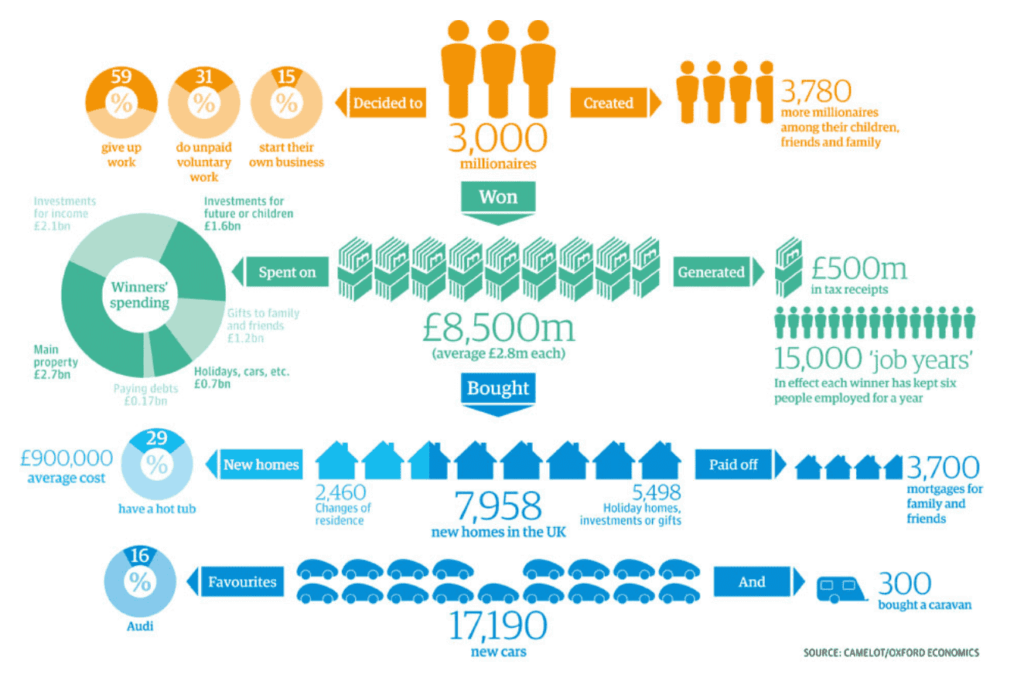
So there’s a lot of misconception revolving around lotteries. There are millions of tickets that produce small wins and thousands awarding mid-tier wins. As for the jackpot winners, those take months for somebody to finally win.
How Public Revenue Is Used
In addition to all the buzz and entertainment they generate, lotteries do a lot to serve the public good as well. Some of the most important areas they contribute to are:
- Education
- Infrastructure
- Public Health
- Community Development
This is one of the reasons lotteries are sometimes described as “voluntary taxation”. Unlike traditional taxes, participation is optional, yet the cumulative effect of these widespread ticket purchases generates billions in public revenue annually. However, one criticism is the fact that lower-classmen participate proportionally in lotteries, so it is seen by some as a regressive form of revenue collection.
Leave a Reply