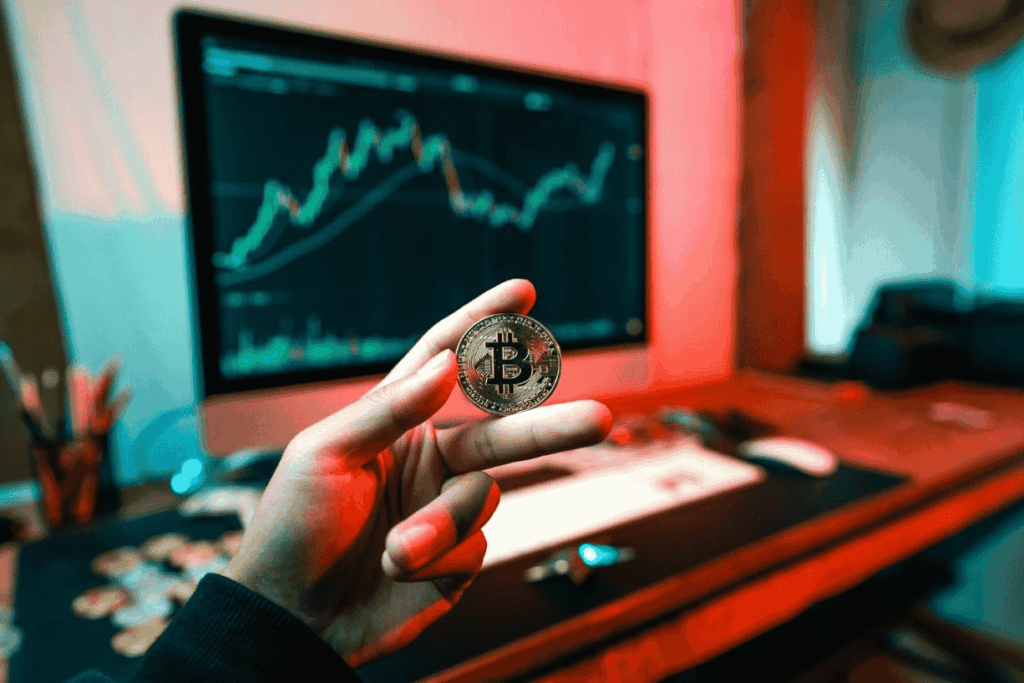

Indian investors are watching a familiar pattern unfold again. When the rupee comes under pressure and confidence in traditional purchasing power starts to weaken, money looks for faster moving stores of value. This time, Bitcoin is drawing renewed attention as currency volatility, global uncertainty, and a weaker rupee make the digital asset look less like a fringe bet and more like a defensive alternative for a growing slice of India’s risk taking capital. Recent pressure on the rupee, driven by high oil prices, foreign outflows, and central bank intervention, has sharpened that mood across the market.
For many Indian participants, this shift is not only about chasing headlines. It is about preserving value in a market where imported inflation risk, energy costs, and external shocks can hit the rupee quickly. When that happens, younger investors, active traders, and even some high net worth participants start looking beyond domestic assets. Gold still matters, of course, but digital assets now sit much closer to the mainstream conversation than they did a few years ago. India’s strong crypto adoption trend shows that the appetite never really disappeared, even after tough taxes and tighter scrutiny.
That is why the bitcoin price around the levels suggested in this market narrative is attracting so much attention in India. For rupee based investors, the move is not judged only in dollar terms. It is also judged against what the rupee is doing, what inflation may do next, and whether domestic purchasing power feels stable enough to stay parked in cash. Once the local currency starts looking fragile, Bitcoin begins to look like a different kind of escape valve.
Rupee Weakness Is Changing Investor Behaviour
The rupee’s recent slide has made global assets feel more urgent for Indian investors. Reuters reported that the currency fell to record lows in March under pressure from elevated oil prices and foreign portfolio outflows, while the Reserve Bank of India had to step in with extraordinary measures to stabilize conditions. That kind of backdrop changes behaviour fast. Investors stop asking only where returns may come from and start asking where value can be protected.
A weaker rupee changes the mental math
When the rupee loses ground against the dollar, Indian investors begin recalculating everything. Imported goods become more expensive, inflation worries feel more immediate, and global assets priced in dollars suddenly look more attractive. Even if Bitcoin remains volatile, some investors view it as a way to step outside rupee risk rather than simply as a speculative trade. That is a powerful mindset shift in any market, especially in one as large and digitally engaged as India.
Oil pressure makes the currency story worse
India remains deeply exposed to oil shocks, and Reuters noted that rising crude prices have widened concern over the current account deficit and added pressure on the currency. That matters because many Indian investors understand this chain reaction instinctively. Higher oil can weaken the rupee, a weaker rupee can worsen inflation risk, and that combination often pushes people toward assets seen as harder to debase. Bitcoin benefits from that search, even if it is far from a traditional safe haven.
The result is a market mood where Bitcoin no longer looks disconnected from India’s macro story. It is increasingly part of the way investors respond when the rupee feels vulnerable and the global environment looks unstable.
India’s Crypto Appetite Never Really Went Away
India’s crypto market has faced taxes, compliance pressure, and repeated policy caution, but investor interest has stayed remarkably resilient. Reuters reported that India led global crypto adoption for the second straight year in a Chainalysis report, which says a lot about the depth of retail participation even under a difficult policy regime. That matters because when macro stress returns, the infrastructure of interest is already there.
Retail participation remains broad
A large part of India’s crypto story is demographic. The country has a huge base of mobile first investors who are comfortable with digital platforms and already familiar with high volatility products. For this crowd, Bitcoin is not a strange new asset. It is an asset they have watched for years. So when the rupee weakens and domestic uncertainty rises, many do not need to be convinced to explore crypto. They only need a trigger.
Even taxes have not fully stopped the flow
India’s tough tax regime and oversight have clearly changed where and how trading happens, but they have not erased demand. Reuters previously reported that a huge share of Indian crypto trading shifted to offshore platforms after the domestic tax burden rose, showing that investors were willing to keep participating despite friction. More recently, officials said India is monitoring evolving crypto trading to ensure tax compliance, which suggests authorities know the activity remains significant.
This persistence matters. It means fresh rupee pressure can quickly reconnect with an existing crypto user base rather than having to create one from scratch. That makes Bitcoin flows from India more responsive when macro stress intensifies.
Conclusion
Indian money is moving toward Bitcoin because the local macro backdrop is doing more than creating fear. It is changing the way investors think about currency risk, purchasing power, and diversification. A weaker rupee, high oil exposure, persistent outflows, and an already active crypto culture have combined to make Bitcoin more relevant in India than many traditional market observers expected. Whether that flow continues will depend on the rupee, regulation, and global sentiment. But for now, the message is clear: when the rupee stumbles, Indian capital starts looking harder at assets that sit outside its reach.
Leave a Reply