Texas Holdem is the most widely played form of poker on the planet. Every televised event, major online tournament, and most home games run some variant. Simple rules at the surface; near-infinite depth underneath. Mastering Texas Holdem poker requires a strong Texas Holdem strategy combined with poker mathematics and disciplined psychology. This guide covers the rules, odds, and tips that separate winners from the rest.

Learning how play Texas Holdem takes minutes; the rules are deceptively simple compared with the skill needed at high stakes.
Understanding Texas Holdem Rules
Texas Holdem rules are the foundation everything rests on. Each player receives two private hole cards. Five community cards appear face-up over three stages: the flop (three cards), the turn (one), and the river (one). Players combine hole cards with the board to form the best hand.
Two forced bets, the small blind and big blind, start the action and rotate clockwise each hand. Four betting rounds follow: pre-flop, flop, turn, river. BC Poker rooms mirror the flow of every major live cardroom. Players fold, check, call, bet, or raise based on hand strength and table reads.
If two or more players remain after the river, the hand reaches showdown and the strongest five-card combination wins. To read more on showdown mechanics, the BC Poker Academy covers the edge cases.
Hand Rankings and Winning Combinations
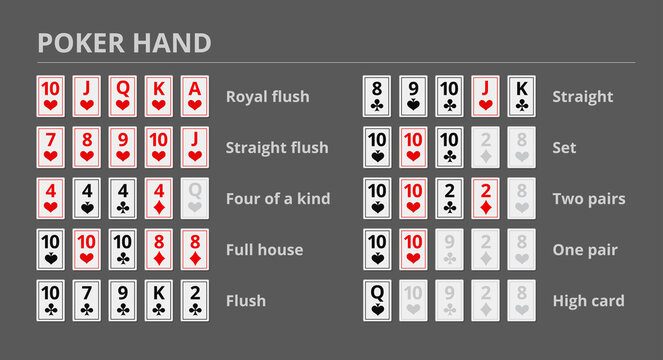
Poker hand rankings are universal across most variants. From the unbeatable royal flush down to high card, the hierarchy decides every showdown.
The table below summarizes the standard ten-tier ranking used in Texas Holdem.
| Hand Ranking | Example | Relative Strength |
| Royal Flush | A-K-Q-J-10 suited | Highest |
| Straight Flush | Five consecutive suited cards | Very Rare |
| Four of a Kind | A-A-A-A-K | Extremely Strong |
| Full House | A-A-A-K-K | Strong |
| Flush | Five suited cards | Strong |
| Straight | Five consecutive cards | Medium-Strong |
| Three of a Kind | A-A-A-K-Q | Medium |
| Two Pair | A-A-K-K-Q | Medium |
| One Pair | A-A-K-Q-J | Common |
| High Card | A-K-Q-9-4 | Weakest |
Knowing where each hand sits is only the start. Recognizing how poker combinations interact with the board, bet sizing, and an opponent’s likely range is the real skill.
Texas Holdem Odds and Mathematics
Texas Holdem odds drive every profitable decision. Probabilities turn guesswork into calculated risk. Drawing hands rely on outs, cards that improve your holding. A flush draw on the flop has nine outs and 35 percent equity by the river.
Pot odds compare the current bet to the pot. If a call costs 20 chips into a 100-chip pot, the pot offers 5-to-1, meaning you need 17 percent equity to call profitably. Expected value in poker extends this: each decision sums possible outcomes weighted by probability.
Implied odds extend the math: they account for chips you can win on later streets if your draw completes. A small set on a dry board has weak immediate pot odds but strong implied odds against an opponent committing top pair. Good poker strategy weighs both.
Strategic Play Across Every Betting Street
Pre-flop strategy starts with hand selection by position. Premium pairs (AA, KK, QQ) and broadways play from any seat; suited connectors belong in late position. Enter pots with hands that have clear plans.
Flop strategy depends on board texture and how it connects with your range. A dry board (K-7-2 rainbow) favors continuation bets. A wet board (9-8-7 two-tone) demands selective aggression.
Turn strategy narrows the range as one more card changes equity. River strategy is the showdown street: bluffs need credible representation, value bets need optimal sizing. The largest pots land here.
A short list of principles separates profitable players from break-even ones:
- Three-bet for value with the top of your range; flat weaker hands.
- Continuation-bet flops that favor your pre-flop range, not every flop.
- Size value bets to the maximum opponents will call with worse hands.
- Bluff with hands that have backup equity, such as flush or straight draws.
- Fold the river when bet sizing does not match a bluff.
- Avoid calling out of curiosity when fold is the correct decision.
The Importance of Position in Texas Holdem
Poker positions shape every decision more than card strength alone. Early position (UTG, UTG+1) needs the tightest ranges. Middle position widens slightly. Late position, particularly cutoff and button, opens the widest ranges.
The button is the most profitable seat. Acting last on every postflop street gives complete information before committing chips. Blind play is the inverse: small and big blinds act first postflop and need disciplined defending. Winning players earn most of their poker win rate from late position.
Psychology and Real-World Poker Examples
Poker psychology covers reading opponents, recognizing betting patterns, and emotional control. Tells are unreliable; betting patterns across many hands carry far more information. A player who three-bets only premium hands has a different range from one who three-bets light from the button.
Example hand: you hold AK on a J-7-3 rainbow flop. A tight opponent bets two-thirds pot. The line suggests a strong made hand. Folding AK here, even with two overcards and 6 outs, is often correct because the opponent’s range is heavy on top pair or better. Poker decision making relies on ranges, not card sentiment.
Reading betting patterns builds opponent profiles that survive across sessions. A player who min-raises preflop tells a different story than one who opens big. Every observation sharpens the next call.
Tips for Consistent Long-Term Success
Bankroll management is the boundary between sustainable play and a hobby that drains finances. Cash-game beginners keep at least 30 buy-ins; tournament players need 100 buy-ins because variance is higher.
Table selection is the overlooked edge in online poker. Weaker opponents directly increase win rate. Study routines matter: reviewing hand histories, working with solvers, and discussing spots with stronger players
Play Strategic
Texas Holdem rewards players who combine strategy, mathematics, discipline, and psychology. Rules and hand rankings are the entry point; position, pot odds, and emotional control define the winners.
Variance is the harsh truth of the game. A well-played session can lose; a clumsy one can win. What matters is the quality of decisions across thousands of hands, not any single pot. Players who internalize that outlast it.
Leave a Reply